

You don't win until you win.

I wasn’t able to record this week; I’ll share this week’s video next week!
I’ve never really understood vision boards.
When I was writing my book, my publisher encouraged me to make one. I did... sort of. I arranged some images on a board, stared at it, and checked it off my to-dos while wondering why everyone seemed so inspired by this exercise.
I assumed I was just doing it wrong.
Then I read something by Nir Eyal that finally clicked.
In Beyond Belief, he writes about research suggesting that vividly imagining achieving a goal can sometimes reduce the motivation to pursue it. If your brain spends enough time enjoying the feeling of success, it can start acting as though you’ve already made meaningful progress.
That explained a lot.
I’m not against visualization. I’m against stopping there.
Last week, I was listening to the Nobody Asked Us podcast. Kara Goucher and Des Linden were interviewing Dakotah Popehn before Grandma’s Marathon. Popehn, who wants to win the race the most times ever, was going for her third win.
Dakotah shared something that stuck with me.
When you’re two or three miles from the finish of a marathon, that’s too early to picture yourself breaking the tape or standing on the podium.
Instead, you focus on the next mile.
The next stop sign.
The next turn.
The next step.
Because the race isn’t over yet.
Of course, plenty of elite athletes talk about visualizing success. That’s not inconsistent. It’s about the timing. The visualization happens before the race, not instead of the race. Once the gun goes off, they’re not imagining the medal ceremony. They’re thinking about their pace, their breathing, and the runner in front of them (or behind them).
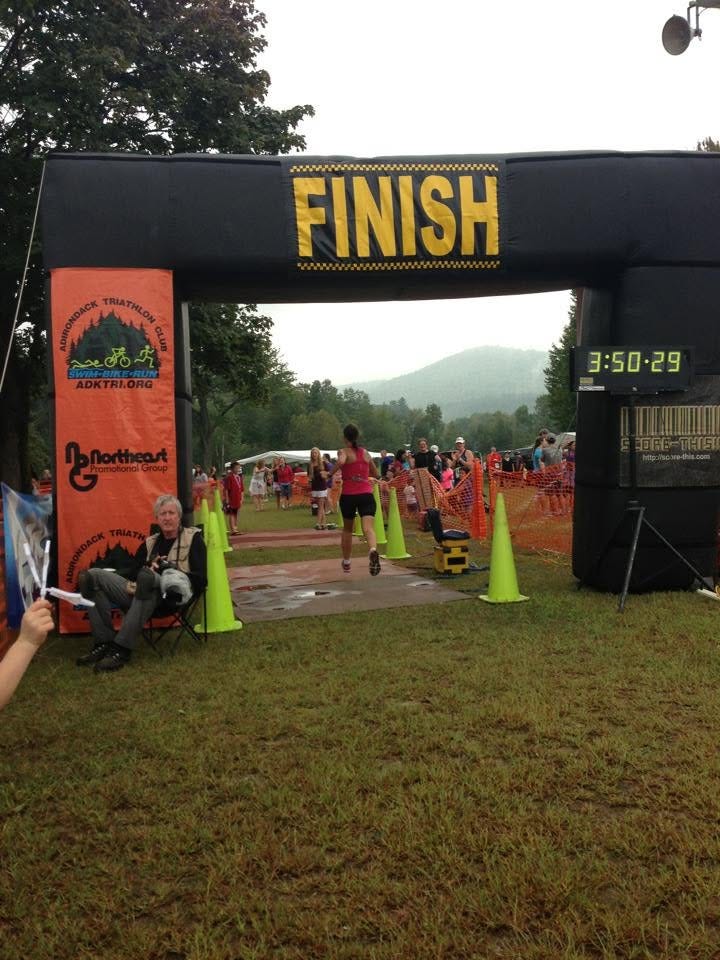
It reminded me of all those viral videos of athletes celebrating just before the finish line, only to have someone sprint past them in the final seconds.
You don’t win until you win.
I’ve seen this outside of sports, too.
Years ago, we were working toward selling our company. Everyone expected the deal to happen.
Then it fell apart overnight because of a CFIUS decision related to an entirely different deal and company.
Another time, we were sure Lehman Ventures would give us a term sheet. It had all been discussed, and we were just waiting on the final in-writing piece.
Until it wasn’t, the term sheet never came. (By the way, this was the summer of 2008 - yikes!)
Eventually, another investor led the round, but it was a reminder that a verbal yes isn’t money in the bank.
Even our eventual acquisition wasn’t “done” when it was announced. We announced the $500 million transaction a week before the COVID lockdowns began. For months, there was uncertainty as regulators reviewed the deal, and the world around us changed dramatically before it closed.
I’ve also watched companies begin acting like a merger was complete before it officially closed. Teams started integrating. Plans were made. People assumed it was inevitable.
Sometimes it is.
Sometimes it isn’t.
Nothing is final until it’s final.
I think that’s why vision boards have never resonated with me.
I’ve found I’m most motivated when I stay focused on the work instead of the outcome.
I can absolutely imagine where I want to go. I have big dreams.
They’ve guided plenty of major decisions in my life. But dreams aren’t the work. The work is the work. And you don’t win until you win.
About Catherine Connelly:
Catherine Connelly is an entrepreneur, keynote speaker, and author of Designing Success: Lessons from 20 Years as a Female Tech Entrepreneur. She co-founded myYearbook as a teenager and helped grow it into The Meet Group, a NASDAQ-listed social discovery and livestreaming company acquired for $500 million. Today, she writes the weekly newsletter Growing Up Startup and speaks about innovation, decision-making, and unconventional career paths.